

Hello to the most incredible community!
This week's questions all come from people who've been doing everything right — and still feel like something is being missed.
Whether it's migraines that won't quit, fatigue that medication hasn't fixed, or not even knowing where to start after years of struggling... these are real questions that deserve real answers.
The theme running through all three this week: your symptoms have a root cause. And it's probably not what you've been told.
Here’s what we’re covering in this todays’s questions:
Click on the subject line to skip ahead to the section for you
Thank you for trusting me with your health. Now, let's get into it.
If your mornings start with coffee, this might be why your inflammation isn't going down

One of the first things I ask clients dealing with chronic migraines or high CRP is: what are you drinking in the morning?
Most of the time, the answer is coffee. And coffee — even good coffee — raises cortisol, irritates the gut, and adds physiological stress to a body that's already inflamed.
That's exactly why I switched.
Pique's Nandaka is what I drink every morning now, and it's what I recommend to anyone who's serious about lowering inflammation long term. It's made with ceremonial cacao, functional mushrooms, and fermented tea — designed to give you calm, steady energy without triggering the cortisol spike that coffee does.
Pique calls it the "Rolls-Royce of coffee alternatives." I call it one of the simplest daily changes you can make to support your nervous system and your liver at the same time.
Use my link for 20% off for life + free gifts: Pique Nandaka
Q: Nurse Doza, I recently saw one of your videos about migraines and you mentioned a blood test for it called CRP. I have had mine checked and it's really high. My doctor wasn't concerned but I have been dealing with migraines my whole life and you mentioned that this test means inflammation. If the lab report shows inflammation, what do I do?
A: Nurse Doza: Migraines can be an indication of inflammation in the body. Most of the time, it starts in the gut, the liver, with poor sleep, being insulin resistant, or with a past infection (coincidentally, all those things can raise hsCRP in labs). Long-term medications are rarely the answer, which means a natural, anti-inflammatory approach can be the best option for lowering the number and the intensity of migraines and headaches.
I would limit the exposure to toxins, heavy metals, microplastics, pesticides, glyphosate, food dyes, high fructose corn syrup, EMFs, and anything else that can disrupt your balance and energy. Any of these stressors can lead to inflammation that can show up as migraines. Dairy can also be an unexpected contributor to chronic migraines.
I would look at a good liver detox. The liver can help lower inflammation in the body, and it has the ability to get rid of toxins, past infections, and ultra-processed foods. This can be done daily, with lifestyle, diet, and supplements.
The best way to detox the liver:
Eliminate as many daily stressors as possible (see previous paragraph)
Drink more water
Sweat more. Daily movement or 15-20 minutes of a dry sauna, if possible.
Start our free 14 day liver detox course
Start our LIVER BOOST supplement (1-4x/day)
Develop a better sleep plan (sleeping detoxes the brain/body)
If migraines continue, let’s have an online consult to see what else could be causing them. Sometimes there’s an autoimmune connection.

There's a reason your inflammation keeps coming back. 40% of people have this gene variant — and most have never heard of it.
If you've been dealing with migraines, brain fog, low drive, or poor sleep for years and can't figure out why... there's something most doctors never test for.
Everyone has the MTHFR gene. But 40% of us carry the variant that disrupts methylation — the process your body uses to regulate inflammation, detoxify, produce neurotransmitters, and repair DNA. When methylation is off, everything is off. Including your mood, your sleep, and yes — your migraines.
This is exactly why we created BLISS.
It's a sublingual mood-booster designed to support the methylation pathway directly — meaning it gets to work fast, absorbed under the tongue before it even hits your gut. Brain fog, low drive, and poor sleep all have a root cause. BLISS helps address it.
15% off ends May 31st.
Q: Hi Nurse Doza! I have been meaning to schedule an appointment with you for years now but honestly, I feel like I’m a mess and I dont know where to start. I want to come see you but, with money tight, I feel like I am going to continue to suffer. Where do I start? I am missing a gallbladder, I have had a hysterectomy, I struggle to lose weight and I am tired all the time. I have some recent labs but the doctor always just tells me that “everything looks fine”. Any guidance would be helpful! Thank you for helping us.
A: Nurse Doza: I would look into our online School of Doza. We have courses and classes on everything from “Stress Management”, “Insulin”, “Fasting”, “The Brain” and even “Longevity”. I would start with our “Gallbladder” course which has 6 different classes explaining how to support your body after gallbladder surgery, or even if you are trying to keep it. Each class is just $10 and you can learn at your own pace. Take the “Hormones” course next as we tell you how to balance your hormones for better energy and weight.

Extra credit: If you become a monthly student in our school, there is a weekly class called “Ask Me Anything” where you can work with me in a group consult. Nothing is off topic and your questions can help you and other students become better health advocates.

Not sure where to start? This is $10.
If the answer to the question above resonated with you — whether you're missing a gallbladder, struggling with hormones, or just trying to understand what's going on in your body — I built something for exactly this moment.
Each course at The School of Doza is just $10 and covers one focused topic in a way your doctor never will. Step by step. In plain language. On your own schedule.
Some of the most popular ones right now:
🫶 Gallbladder — How to support your body after surgery, or keep the one you have
⚡ Hormones — Estrogen, cortisol, insulin, and how they all connect to your energy and weight
🧠 The Brain, Fasting, Longevity, Stress Management — and more
You don't need a lot of money to start taking your health seriously.
You just need $10 and the decision to start.
→ Browse all courses at schoolofdoza.com/courses
Q: I need your help Nurse Doza! I am tired all the time and I know it's my hormones. I have thyroid issues and I have taken Synroid for years but I am still tired. It doesn't help that I am in menopause but I have been like this for a while. Should I be taking B12? What can I do to get my energy levels up?
A: Nurse Doza: It’s not your thyroid. It’s your adrenal glands. It has been for awhile and taking thyroid medication won’t fix the adrenals.
Your adrenal glands respond to stress by releasing hormones like cortisol, dopamine and epinephrine (adrenaline). With too much stress, and over time, the adrenal glands become over active and depleted leading to chronic fatigue, “burn out syndrome” and being tired all the time. Elevated cortisol lowers your thyroid hormone production and raises your TSH (thyroid stimulating hormone). This appears as hypothyroid in labs, but really it’s a person being stuck in “flight or fight” mode. The answer is to support the adrenal glands.
How to support your adrenal glands to get more consistent energy throughout the day, and lower the suppression of the thyroid:
Find out what is causing you to be stuck in “fight or fight” mode: work, home, friends, spouse, past trauma, etc. Work on this (therapy, change of scenery, etc.)
Develop a better morning routine. This sets the tone of your day, your mindset, your sleep and your health.
Listen to binaural beats daily. It’s a sound that can slow the frequency of your brainwave activity to help you be calm, relaxed and in “rest & digest” mode (the opposite of “flight or fight” mode).
Start our ZEN supplement which has actual bovine adrenal gland. Take 1x in the morning and 1x in the afternoon. Look for calm energy within 1-2 hours. It also has Vitamin B5 which helps regulate Cortisol levels.
Extra credit: Take our $10 “Hormones” course. This course could very well be the information needed to help you get your life back.
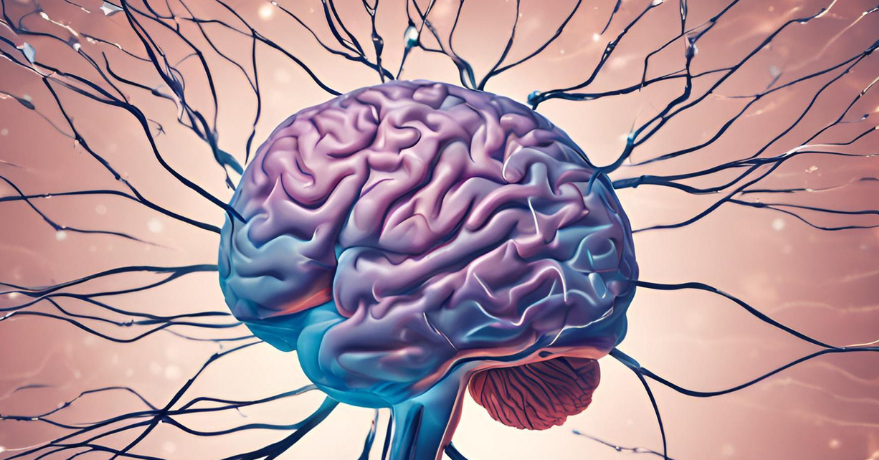
Coming Up in Class: What is the MTHFR Gene?

🎓 One more thing — we're going deep on MTHFR right now.
If the MTHFR gene came up earlier in this newsletter and you thought "I need to understand this better" — we're covering it live inside The School of Doza.
This is not a recorded video you'll save and never watch. This is a live class where you can ask questions, get real answers, and actually understand what's going on in your body at the genetic level.
Brain fog, mood, sleep, migraines — it can all trace back here. Come learn why.
You can join the class with a free 7-day trial inside the School of Doza.
Your symptoms are not a life sentence.
High CRP. Chronic migraines. Exhaustion that medication hasn't fixed. Not knowing where to even begin.
These aren't signs that your body is broken. They're signs that it's been asking for something it hasn't gotten yet.
The answers are out there. And most of the time, they start with the basics — lower the inflammation, support the liver, address the stress, and give your body what it needs to actually heal.
You don't have to do everything at once. Just start somewhere.
And if you need help figuring out where that somewhere is — I'm here.
To your health,
Nurse Doza